Trading is often described as a game of patience, discipline, and timing. But timing does not only mean when you enter or exit a trade. It also means how closely you are watching the market while it moves. This is where lower time frame trading comes into the picture.
Lower time frames allow traders to see the market in more detail. They show price movements as they unfold, candle by candle, minute by minute. For traders who want faster feedback, clearer entries, and tighter control over risk, lower time frame trading can offer sharper insights than higher time frames alone.
This article explores how lower time frame trading works, why it matters, and how to use it intelligently without getting overwhelmed by noise.
Understanding Time Frames in Trading
A time frame in trading refers to how much time each candle or bar on a chart represents. A daily chart shows one candle per day. A one-hour chart shows one candle per hour. A five-minute chart shows one candle every five minutes.
Higher time frames move slowly and give a broad view of market trends. Lower time frames move quickly and show short-term price fluctuations. Neither is better or worse by default. The real advantage comes from knowing when and how to use each.
Lower time frames are commonly used by day traders and short-term traders who aim to capture intraday price movements. They help traders react faster to changes in market behavior.
Why Lower Time Frame Trading Offers Sharper Insights
Lower time frames reveal details that higher time frames hide. On a daily chart, a single candle might represent hours of intense buying and selling. On a five-minute chart, you can see that battle play out in real time.
This extra detail helps traders understand momentum, volatility, and market intent more clearly. You can see where buyers step in aggressively, where sellers lose strength, and where price hesitates before making a move.
Lower time frame trading also allows for more precise entries and exits. Instead of entering a trade based on a large candle on a higher time frame, you can wait for confirmation on a smaller time frame and reduce unnecessary risk.

The Role of Price Action in Lower Time Frames
Price action becomes especially powerful on lower time frames. Since price action focuses on raw price movement rather than indicators, lower time frames give you more opportunities to read the story of the market.
The price action time frame you choose determines how detailed that story is. On lower time frames, patterns form and resolve quickly. Support and resistance levels are tested more frequently. Fake breakouts, quick reversals, and momentum bursts become easier to spot.
This does not mean every movement is meaningful. Lower time frames include more noise. The skill lies in filtering that noise and focusing on price behavior that aligns with the broader market context.
Combining Lower and Higher Time Frames for Clarity
One of the most effective ways to trade lower time frames is by using technical analysis on multiple time frames. This approach brings structure and balance to fast-moving charts.
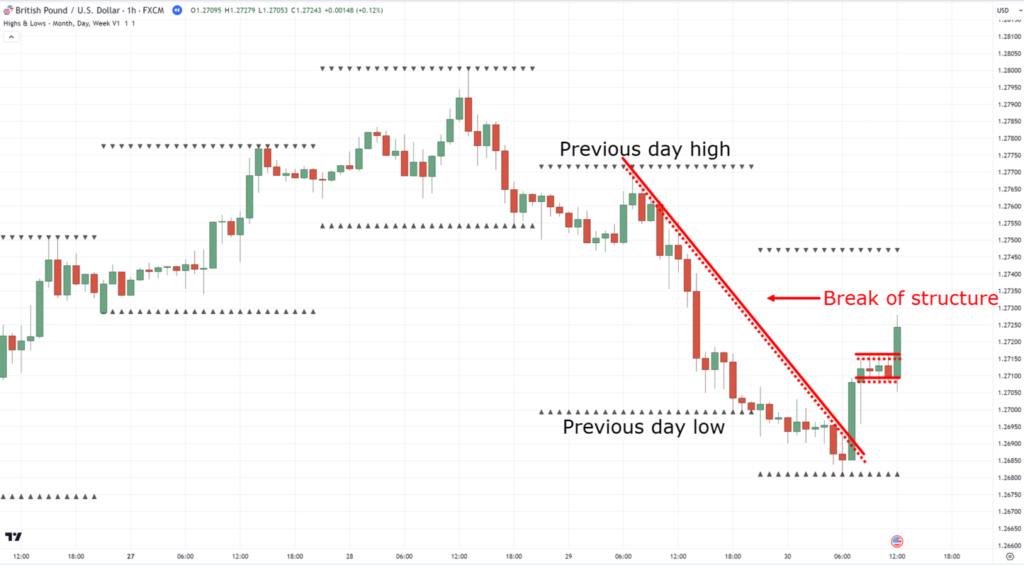
A trader might start by identifying the overall trend on a higher time frame, such as the daily or four-hour chart. This higher time frame provides direction and bias. Once that direction is clear, the trader drops down to a lower time frame to look for entries that align with the bigger picture.
This method prevents random trading and reduces emotional decisions. Lower time frames are then used as a tool for execution rather than decision-making alone.
Technical analysis on multiple time frames helps traders stay aligned with market structure while still benefiting from the precision of lower time frame entries.
Choosing the Best Chart Time Frame for Day Trading
There is no single best chart time frame for day trading that works for everyone. The ideal time frame depends on your personality, experience, and risk tolerance.
Some traders prefer very fast charts like one-minute or two-minute time frames. These charts offer many trade opportunities but require intense focus and quick decision-making. Other traders feel more comfortable with five-minute or fifteen-minute charts, which move slightly slower and provide clearer setups.
The best chart time frame for day trading is one that allows you to think clearly without feeling rushed or bored. If a chart moves too fast, mistakes increase. If it moves too slowly, opportunities may feel limited.
Many successful day traders use a combination of time frames rather than relying on just one. A slightly higher intraday chart for context and a lower one for entries often creates a smoother trading experience.
Risk Management Becomes More Precise
Lower time frame trading allows for tighter stop losses and better position sizing. Since entries are more precise, traders can define risk more clearly.
Instead of placing wide stops based on large price swings, lower time frame traders can place stops near recent highs or lows. This keeps losses smaller and makes risk-to-reward ratios more attractive.
However, this precision also requires discipline. Small stops mean less room for error. Traders must accept that not every trade will work and that being stopped out is part of the process.
When managed well, lower time frame trading can reduce emotional stress because losses are controlled and predictable.
The Psychological Challenge of Lower Time Frames
Lower time frame trading demands mental discipline. Charts move quickly, and emotions can rise just as fast. Fear, greed, and impatience show up more often when watching price tick by tick.
Overtrading is a common problem. Because lower time frames offer more setups, traders may feel tempted to take trades that do not fully meet their criteria.
Staying selective is essential. Having clear rules and sticking to them helps maintain consistency. Lower time frame trading rewards focus and punishes impulsive behavior.
Taking breaks, limiting screen time, and reviewing trades calmly can help maintain psychological balance.
Indicators and Lower Time Frame Trading
Indicators can still be useful on lower time frames, but they must be used carefully. Too many indicators can create confusion and delay decision-making.
Simple tools like moving averages, volume, or basic momentum indicators often work better than complex systems. The goal is to support price action, not replace it.
When using technical analysis on multiple time frames, indicators can help confirm trends on higher time frames while lower time frames focus more on price behavior and structure. Keeping charts clean improves clarity and confidence.
When Lower Time Frame Trading Is Not Ideal
Lower time frame trading is not suitable for everyone. Traders with limited time, low tolerance for stress, or a preference for slower decision-making may find it exhausting.
Market conditions also matter. During low volatility periods, lower time frames can become choppy and unpredictable. In such environments, higher time frames may offer better clarity.
Understanding when not to trade is just as important as knowing when to trade. Lower time frames should be used strategically, not compulsively.
Developing Skill and Consistency Over Time
Like any trading approach, lower time frame trading requires practice. Patterns become clearer with screen time. Decision-making improves with experience.
Journaling trades, reviewing charts, and replaying sessions help accelerate learning. Over time, traders begin to recognize which setups work best for them and which time frames suit their style. Consistency comes from repetition and reflection, not from chasing every opportunity.
Final Thoughts
Lower time frame trading can provide sharper insights, better entries, and more control over risk when used correctly. It reveals the inner workings of price movement and allows traders to respond quickly to changing market conditions. By combining lower time frames with higher-level context, using technical analysis on multiple time frames, and respecting the role of price action time frame selection, traders can build a balanced and effective approach.
The best chart time frame for day trading is ultimately the one that helps you stay calm, focused, and consistent. Lower time frames are powerful tools, but only when guided by structure, discipline, and patience. Trading is not about speed alone. It is about clarity. And when used wisely, lower time frames can bring that clarity into sharper focus.