
The stock market often feels overwhelming to beginners because of the sheer amount of specialized language used by traders, brokers, and financial media. This terminology in stock market discussions can make even simple concepts sound complex, creating confusion and hesitation for new participants. However, once you understand the core stock trade definitions and commonly used expressions, the market becomes far more approachable and logical.
Learning basic stock market terms is not just about memorization. It is about understanding how trades are executed, how prices move, and how risks and rewards are calculated. Every experienced trader started exactly where you are now, struggling with unfamiliar stock broker terms and unclear market jargon. This article is designed to simplify those ideas and explain them in a clear, conversational way.
By the end of this guide, you will be familiar with 74 essential terms in stock market language that every aspiring trader should understand before placing their first trade or investment.
Understanding the Foundation of the Stock Market
The stock market is a platform where buyers and sellers come together to trade ownership in companies. A stock represents a small portion of ownership in a company, and owning it means you have a claim on a part of the company’s profits and assets. Shares and equities are often used interchangeably to describe this ownership, and understanding this distinction is one of the first basic stock market terms beginners encounter.
A listed company is one whose shares are traded on a recognized stock exchange. A stock exchange is an organized marketplace where trading happens under regulated conditions. In India, exchanges like NSE and BSE facilitate these transactions. The index is another foundational concept, representing a group of selected stocks used to measure market performance. Examples include benchmarks that indicate whether the market is generally rising or falling.
Market capitalization, commonly called market cap, refers to the total value of a company’s outstanding shares. It helps classify companies into large-cap, mid-cap, and small-cap categories. These classifications help traders and investors understand the size, stability, and growth potential of a company.
Core Trading and Investment Concepts
Trading and investing are two closely related but distinct activities. Trading focuses on short-term price movements, while investing aims for long-term wealth creation. A trader is someone who actively buys and sells securities, whereas an investor typically holds assets for extended periods. Understanding this difference is vital when learning terms in stock market usage.
A portfolio is the collection of stocks and other financial instruments owned by an individual. Diversification refers to spreading investments across different assets to reduce risk. Risk itself represents the possibility of losing money, while return refers to the profit earned from an investment. These stock trade definitions form the backbone of all market activity.
Liquidity is another important concept, describing how easily a stock can be bought or sold without affecting its price. Highly liquid stocks usually belong to large, actively traded companies. Volatility measures how much a stock’s price fluctuates over time, with high volatility indicating rapid and unpredictable price movements.

Orders and Trade Execution Terms
When you place a trade, you do so using specific order types. A market order instructs the broker to buy or sell a stock immediately at the current market price. A limit order allows you to specify the price at which you want to buy or sell, offering more control but no guarantee of execution. A stop-loss order is designed to limit losses by automatically selling a stock when it reaches a predefined price.
The bid price is the highest price a buyer is willing to pay, while the ask price is the lowest price a seller is willing to accept. The spread is the difference between these two prices and reflects liquidity and transaction costs. Trade volume indicates the number of shares traded during a specific period and is often used to gauge market interest.
Execution refers to the completion of a buy or sell order. Slippage occurs when a trade is executed at a price different from what was expected, often during volatile conditions. Settlement is the process through which ownership of shares is transferred and payment is completed.
Stock Broker Terms and Market Participants
A stockbroker is an intermediary who executes trades on behalf of clients. Brokerage refers to the fee charged for this service. Full-service brokers offer advisory and research services, while discount brokers focus on low-cost trade execution. Understanding these stock broker terms helps traders choose the right platform.
A depository holds securities in electronic form, making trading safer and more efficient. A demat account is used to store shares electronically, while a trading account is used to place buy and sell orders. Clearing corporations ensure that trades are settled smoothly and reduce counterparty risk.
Market makers play a key role by providing liquidity, continuously quoting buy and sell prices. Institutional investors, such as mutual funds and insurance companies, trade large volumes and significantly influence price movements. Retail investors are individual participants trading smaller quantities.
Price and Trend Analysis Terms
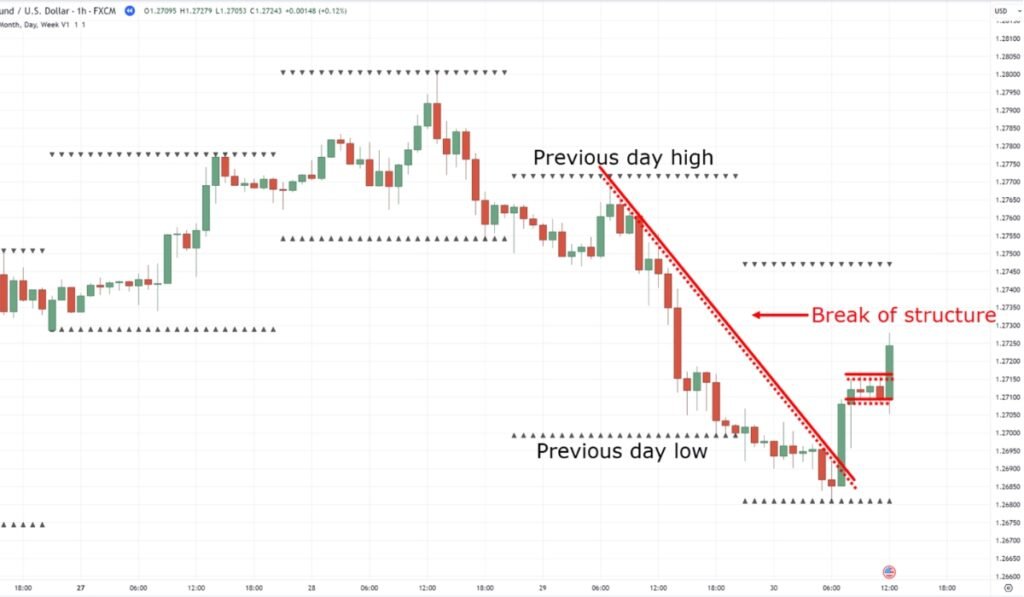
Price action refers to the movement of a stock’s price over time and forms the basis of technical analysis. Support is a price level where demand is strong enough to prevent further decline, while resistance is where selling pressure prevents further rise. Trends describe the general direction of price movement and can be upward, downward, or sideways.
A breakout occurs when the price moves beyond a support or resistance level with strong volume. Pullbacks are temporary reversals within a larger trend. Consolidation refers to a period when prices move within a narrow range before the next significant move.
Indicators are mathematical calculations based on price and volume used to analyze trends. Moving averages smooth price data to identify trends, while momentum indicators measure the speed of price changes. These basic stock market terms are widely used by traders across all experience levels.
Fundamental Analysis and Valuation Terms
Fundamental analysis focuses on evaluating a company’s financial health. Earnings refer to a company’s profits, while revenue represents total income from sales. The price-to-earnings ratio compares a company’s stock price to its earnings and is commonly used to assess valuation.
Dividends are portions of profit distributed to shareholders, and dividend yield measures dividend income relative to stock price. Book value represents the net asset value of a company, while intrinsic value is an estimate of what a stock is truly worth based on fundamentals.
Balance sheets, income statements, and cash flow statements are financial reports used in analysis. Assets are what a company owns, liabilities are what it owes, and equity represents shareholder ownership. Understanding these stock trade definitions helps investors make informed decisions.
Market Conditions and Sentiment Terms
Bull markets describe periods of rising prices and optimistic sentiment, while bear markets are marked by falling prices and pessimism. Market sentiment reflects the overall attitude of investors toward the market or a specific stock. Corrections are short-term declines that occur within longer-term uptrends.
Rallies refer to sharp price increases over a short period. Panic selling occurs when investors sell out of fear, often leading to exaggerated declines. Speculation involves taking higher risks in anticipation of quick profits rather than relying on fundamentals.
Overbought and oversold conditions indicate whether a stock may be priced too high or too low relative to recent activity. These terms in stock market discussions are frequently used in market commentary and analysis.
Advanced Trading and Risk Management Terms
Margin trading allows traders to borrow money to increase their trading position, amplifying both gains and losses. Leverage refers to the use of borrowed funds to control a larger investment. Hedging is a risk management strategy used to offset potential losses through opposite positions.
Short selling involves selling borrowed shares with the expectation of buying them back at a lower price. Covering refers to closing a short position by repurchasing the shares. Options are derivative instruments that give the right, but not the obligation, to buy or sell at a specific price.
Futures are contracts to buy or sell an asset at a predetermined price in the future. Expiry is the date when derivative contracts become invalid. Open interest represents the total number of outstanding derivative contracts and helps assess market participation.
Conclusion
Understanding these 74 crucial stock market terms is a significant step toward becoming a confident and informed trader. The terminology in stock market conversations no longer needs to feel intimidating once you grasp the meaning behind commonly used expressions. Each term you learn builds clarity and helps you interpret market movements more effectively.
Stock broker terms, trading concepts, and fundamental definitions are not just theoretical knowledge. They directly influence how you place trades, manage risk, and evaluate opportunities. By mastering these basic stock market terms, you create a strong foundation that supports smarter decision-making and long-term growth.
The stock market rewards those who continuously learn and adapt. With these essential stock trade definitions now clearer, you are better equipped to navigate the markets with confidence, discipline, and understanding.