
Gold has always held a special place in global financial markets. Long before currencies were traded electronically, gold was the backbone of value, trust, and wealth preservation. Even today, in a market dominated by fiat currencies and complex derivatives, gold continues to attract traders across the world. In the forex market, gold trading is not just about price speculation. It is deeply connected to macroeconomic trends, investor psychology, global risk sentiment, and currency movements, especially the US dollar.
Forex gold trading offers unique opportunities but also unique challenges. Unlike currency pairs, gold behaves as both a commodity and a financial asset. This dual nature means that successful traders need a well-defined gold trading strategy, a solid understanding of gold trading indicators, and the discipline to follow proven gold trading tips consistently.
This article explores gold trading strategy and indicators in forex in depth. It covers how gold behaves in the forex market, how traders analyze it, which indicators for gold trading matter most, and how to combine them into a practical trading framework.
Understanding Forex Gold Trading
In forex trading platforms, gold is typically quoted as XAU/USD. This represents the price of one troy ounce of gold denominated in US dollars. When traders buy XAU/USD, they are effectively buying gold while selling the US dollar. When they sell XAU/USD, they are selling gold and buying the dollar.
This structure makes forex gold trading closely linked to the strength or weakness of the US dollar. A weakening dollar often supports higher gold prices, while a strengthening dollar tends to pressure gold lower. However, this relationship is not absolute. During periods of extreme market stress, gold can rise even when the dollar strengthens, as both are sometimes treated as safe-haven assets.
Gold is also sensitive to interest rates, inflation expectations, geopolitical tensions, and global liquidity. These factors make gold trading analysis broader and more macro-driven than many currency trades.
Why Gold Attracts Forex Traders
Gold trading in forex appeals to traders for several reasons. First, gold is highly liquid, especially during London and New York trading sessions. This liquidity allows for efficient trade execution and relatively tight spreads compared to other commodities.
Second, gold often exhibits strong trends. When gold moves, it tends to move decisively, creating opportunities for trend-following traders. At the same time, gold also respects technical levels well, making it suitable for traders who rely on technical gold trading indicators.
Third, gold reacts sharply to news and economic data. Interest rate decisions, inflation reports, employment numbers, and geopolitical events can all trigger significant moves in gold. For traders who understand gold trading analysis, these reactions can offer high-probability setups.
Core Principles of a Gold Trading Strategy
A successful gold trading strategy begins with understanding the market environment. Gold does not behave the same way in all conditions. In risk-off environments, when investors fear economic slowdown or financial instability, gold often rises as capital flows into safe assets. In risk-on environments, where investors seek higher returns, gold may consolidate or decline as funds move into equities and growth assets.
Timeframe selection is another crucial element. Gold behaves differently on intraday charts compared to daily or weekly charts. Short-term traders often focus on volatility and momentum, while longer-term traders pay closer attention to macro trends and key technical zones.
Risk management is especially important in forex gold trading. Gold can move hundreds of pips in a short time, particularly during news releases. Position sizing, stop-loss placement, and emotional discipline are not optional; they are essential for survival.
A well-defined gold trading strategy also includes clarity on trade triggers. Traders should know exactly why they are entering a trade, what invalidates the setup, and where profits will be taken. This clarity prevents impulsive decisions, which are a common cause of losses in gold trading.

The Role of Gold Trading Indicators
Gold trading indicators help traders interpret price behavior and market momentum. While indicators do not predict the future, they provide structure and context to price movements. The key is not to use too many indicators but to select those that align with the chosen trading style.
Indicators for gold trading generally fall into categories such as trend indicators, momentum indicators, volatility indicators, and support-resistance tools. Each category serves a specific purpose in gold trading analysis.
Trend indicators help identify the dominant market direction. Momentum indicators measure the strength or weakness of price movement. Volatility indicators show how much price is fluctuating, and support-resistance tools help identify key decision zones where price may react.
When combined intelligently, gold trading indicators can significantly improve trade timing and confidence.
Moving Averages in Gold Trading
Moving averages are among the most widely used indicators for gold trading. They help smooth price data and highlight trends. In gold trading strategy, traders often use a combination of short-term and long-term moving averages to identify trend direction and potential entry points.
For example, when gold trades above a rising long-term moving average, the broader trend is considered bullish. Pullbacks toward shorter moving averages in such conditions can offer buying opportunities. Conversely, when gold trades below a declining long-term average, rallies toward resistance may offer selling opportunities.
Moving averages also act as dynamic support and resistance levels in gold trading analysis. Gold frequently reacts near these averages, especially on higher timeframes.
Momentum Indicators and Gold Price Strength
Momentum indicators play a critical role in forex gold trading because gold often experiences strong impulsive moves followed by periods of consolidation. Indicators like the Relative Strength Index (RSI) help traders assess whether gold is overbought, oversold, or trending with strength.
In trending markets, overbought conditions do not necessarily signal reversals. Instead, they often indicate strong momentum. This is a common mistake among inexperienced traders who sell gold simply because an indicator shows overbought levels.
A more advanced gold trading strategy uses momentum indicators to confirm trend strength and identify divergences. When gold makes higher highs but momentum indicators fail to confirm, it can signal weakening momentum and potential trend exhaustion.
Volatility and Timing in Gold Trading
Volatility is a defining characteristic of gold. Sudden spikes and sharp reversals are common, particularly during major economic announcements. Volatility indicators help traders adapt their strategies to changing market conditions.
Understanding volatility is essential for gold trading tips related to stop-loss placement and position sizing. In high-volatility environments, tighter stops are more likely to be hit, while wider stops require smaller position sizes to manage risk effectively.
Gold trading analysis often includes monitoring volatility to determine whether the market is suitable for trend-following strategies or range-based approaches.
Support, Resistance, and Market Structure
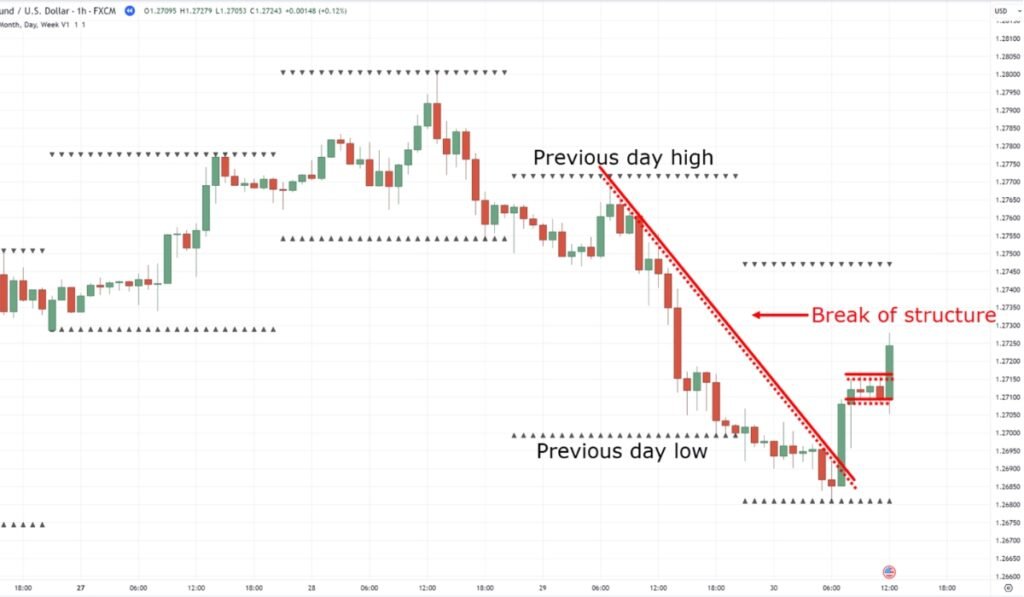
Despite its volatility, gold respects support and resistance levels remarkably well. These levels often form around previous highs and lows, psychological price zones, and areas of high trading activity.
A strong gold trading strategy incorporates market structure analysis rather than relying solely on indicators. Identifying higher highs and higher lows helps confirm uptrends, while lower highs and lower lows confirm downtrends.
Indicators for gold trading work best when combined with clear price structure. This combination helps filter out false signals and improves trade quality.
Fundamental Gold Trading Analysis
While technical indicators are essential, gold trading analysis is incomplete without understanding fundamentals. Interest rates, inflation expectations, central bank policies, and geopolitical risks all influence gold prices.
When real interest rates are low or negative, gold becomes more attractive because the opportunity cost of holding a non-yielding asset decreases. Inflation fears also tend to support gold prices, as gold is viewed as a hedge against currency debasement.
Forex gold trading requires awareness of economic calendars and major announcements. Ignoring fundamentals can lead to being caught on the wrong side of sudden, powerful moves.
Practical Gold Trading Tips for Forex Traders
One of the most important gold trading tips is to trade gold with respect. Gold is not a slow-moving currency pair. It demands patience, discipline, and precise execution.
Traders should avoid overtrading gold, especially during low-liquidity periods. Gold tends to perform best during London and New York sessions when institutional participation is highest.
Another valuable gold trading tip is to align lower-timeframe trades with higher-timeframe trends. Trading against the dominant trend increases risk and reduces probability.
Keeping a trading journal is particularly useful in forex gold trading. Gold’s volatility can amplify emotional responses, and reviewing past trades helps traders identify patterns in behavior and decision-making.
Combining Indicators into a Complete Gold Trading Strategy
The most effective gold trading strategies do not rely on a single indicator. Instead, they combine trend confirmation, momentum assessment, volatility awareness, and price structure analysis.
For example, a trader might identify a bullish trend using moving averages, confirm momentum with an oscillator, assess volatility conditions, and then wait for price to pull back to a key support level before entering a trade. This layered approach improves consistency and reduces reliance on guesswork.
Indicators for gold trading should support decision-making, not replace it. Price action remains the final authority.
Final Thoughts on Gold Trading in Forex
Gold remains one of the most dynamic and rewarding instruments in the forex market. Its unique blend of technical structure and fundamental sensitivity offers opportunities for traders who are willing to study it deeply.
A successful gold trading strategy is built on understanding market context, using gold trading indicators wisely, managing risk carefully, and maintaining emotional discipline. Forex gold trading is not about chasing every move but about waiting for high-quality setups that align with both technical and fundamental factors.