
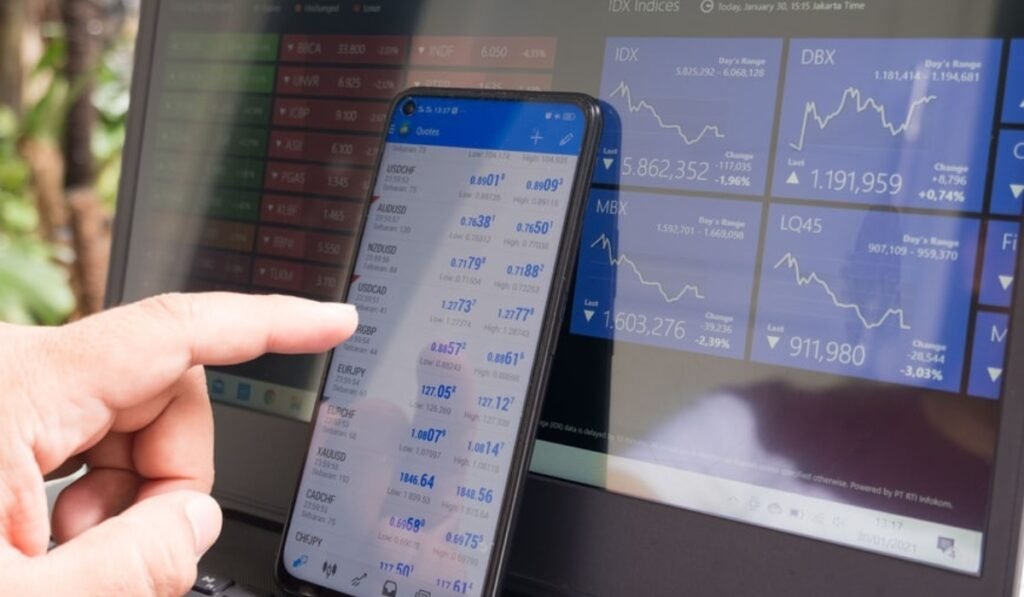
In financial markets, traders are often overwhelmed by the sheer volume of price movement happening across different charts. A price that looks bullish on one chart may appear weak on another, leading to confusion and hesitation. This is where understanding trading time frames and learning how to align them properly becomes a powerful edge. Multi timeframe analysis allows traders to see the market from different perspectives, helping them make more informed, confident, and structured decisions rather than reacting emotionally to short-term fluctuations.
Multi timeframe analysis is not a complex or advanced concept reserved for professional traders alone. In fact, it is one of the most practical methods to improve consistency for beginners and experienced traders alike. By studying the market across more than one time frame, traders gain clarity about overall direction, strength, and potential entry opportunities. This article explores effective strategies for multiple time frame analysis and explains how technical analysis using multiple timeframes can improve trading accuracy and decision-making.
Understanding Trading Time Frames
Trading time frames refer to the duration represented by each candle or bar on a chart. A five-minute chart shows price movement in five-minute intervals, while a daily chart represents one full day of trading in each candle. Choosing the right time frame for trading is not just a matter of preference but also depends on trading style, risk tolerance, and availability of time. A trader who monitors the market all day will naturally operate on shorter time frames, while someone trading part-time may focus on higher time frames.
What many traders fail to realize is that no single time frame provides a complete picture of the market. A lower time frame captures detail and short-term momentum, but it often lacks context. A higher time frame shows the broader trend but may hide short-term opportunities. Trading time frames work best when they are used together rather than in isolation. Multi timeframe analysis bridges this gap by combining multiple perspectives into one coherent market view.
What Is Multiple Time Frame Analysis
Multiple time frame analysis is the process of analyzing the same financial instrument across two or more time frames to understand trend direction, momentum, and structure. Instead of relying on a single chart, traders use higher, intermediate, and lower time frames to confirm their ideas. This method reduces false signals and improves timing, which is critical for long-term consistency.
The core idea behind multiple time frame analysis is simple. Higher time frames define the dominant trend and overall market bias, while lower time frames help refine entries and exits. For example, if the daily chart shows a strong uptrend, a trader can look for buying opportunities on a lower time frame rather than attempting to short against the dominant direction. This alignment between time frames creates clarity and discipline in decision-making.
Importance of Top-Down Analysis
Top-down analysis is one of the most effective strategies for multi timeframe analysis. It involves starting with a higher time frame and gradually moving down to lower ones. This approach ensures that trades are taken in harmony with the broader market structure rather than against it. Many traders make the mistake of starting on lower time frames, which often leads to overtrading and emotional decisions.
When a trader begins with a higher time frame such as a weekly or daily chart, they gain insight into long-term trends, major support and resistance zones, and market sentiment. Once the direction is clear, the trader moves to an intermediate time frame to observe price behavior and consolidation patterns. Finally, a lower time frame is used to fine-tune the entry. This structured approach to technical analysis using multiple timeframes significantly improves trade quality and reduces unnecessary losses.

Selecting the Right Time Frame for Trading
Choosing the correct time frame for trading depends largely on a trader’s goals and lifestyle. A long-term investor may rely heavily on weekly and daily charts, while a swing trader might focus on daily and four-hour charts. Day traders often operate on intraday charts such as fifteen-minute or five-minute time frames, but even they benefit from analyzing higher time frames for context.
The key is consistency rather than perfection. A trader should define a primary time frame where trades are executed and then choose one higher and one lower time frame for confirmation. For example, if the primary time frame is one hour, the higher time frame could be four hours, and the lower time frame could be fifteen minutes. This combination allows traders to balance trend direction with precise timing, making multiple time frame analysis practical and repeatable.
Aligning Trends Across Time Frames
One of the most powerful concepts in multi timeframe analysis is trend alignment. When trends across multiple time frames point in the same direction, the probability of success increases significantly. For instance, if the daily chart shows an uptrend and the four-hour chart is also making higher highs and higher lows, buying opportunities on the one-hour chart become more reliable.
Trend misalignment, on the other hand, often signals caution. If a lower time frame shows a bullish setup while the higher time frame remains bearish, the trade may work temporarily but carries higher risk. Effective traders learn to prioritize higher time frames because they represent stronger market forces. Technical analysis using multiple timeframes helps traders avoid trading against dominant trends and encourages patience when conditions are not aligned.
Using Support and Resistance Across Time Frames
Support and resistance levels gain strength when they are visible on higher time frames. A price level that appears insignificant on a five-minute chart may represent a major turning point on a daily or weekly chart. This is why multiple time frame analysis is essential for identifying meaningful price zones rather than reacting to random noise.
When traders mark key levels on higher time frames first and then observe price behavior around those levels on lower time frames, they gain a clearer understanding of market intent. Lower time frames reveal how price reacts near these zones, providing entry confirmation and risk management clarity. This layered approach to trading time frames allows traders to combine precision with context, which is crucial for sustainable performance.
Role of Indicators in Multi Timeframe Analysis
Indicators become far more effective when used across multiple time frames instead of a single chart. A moving average, for example, may give conflicting signals on different time frames, but these differences can actually provide valuable insight. A strong trend on a higher time frame may remain intact even if a lower time frame shows temporary pullbacks.
By applying the same indicator settings across different time frames, traders can assess momentum consistency and trend strength. Technical analysis using multiple timeframes helps traders avoid overreacting to short-term indicator fluctuations while staying aligned with the broader market direction. Indicators should support price action analysis, not replace it, and multiple time frame analysis ensures they are used in a disciplined and structured manner.
Managing Risk Through Time Frame Awareness
Risk management improves significantly when traders understand how different time frames interact. Stops placed without considering higher time frame structure are more likely to be hit by normal market volatility. A trader using only a lower time frame may place stops too tight, while ignoring larger support or resistance zones visible on higher charts.
Multiple time frame analysis allows traders to place stops and targets more intelligently. By aligning trades with higher time frame trends and key levels, traders reduce the likelihood of being stopped out prematurely. This awareness of trading time frames helps maintain realistic expectations and improves overall risk-reward balance over time.
Common Mistakes in Multi Timeframe Analysis
One common mistake traders make is analyzing too many time frames at once. While multiple time frame analysis is powerful, overcomplicating it leads to confusion and indecision. Traders should limit themselves to a maximum of three time frames and stick to a consistent structure. Jumping between charts without a plan often results in conflicting signals and emotional trading.
Another frequent mistake is giving equal importance to all time frames. Higher time frames should always carry more weight than lower ones. A short-term signal should never override a strong long-term trend without clear justification. Understanding the hierarchy of trading time frames is essential for applying multiple time frame analysis effectively and consistently.
Building Confidence and Discipline
Confidence in trading comes from clarity and repetition, not from prediction. Multi timeframe analysis provides a framework that removes randomness from decision-making. When traders know the higher time frame trend, understand the intermediate structure, and execute based on lower time frame confirmation, they trade with logic rather than hope.
Over time, this structured approach builds discipline and emotional control. Traders stop chasing price movements and start waiting for alignment. Technical analysis using multiple timeframes encourages patience, selectivity, and consistency, which are the true foundations of long-term trading success.
Conclusion
Effective strategies for multi timeframe analysis revolve around clarity, structure, and alignment. By understanding trading time frames and learning how to combine them intelligently, traders gain a deeper perspective of market behavior. Multiple time frame analysis helps define direction, improve timing, manage risk, and reduce emotional decision-making.
Rather than searching for perfect indicators or strategies, traders should focus on mastering the time frame for trading that suits their style and then support it with higher and lower time frame analysis. When applied consistently, technical analysis using multiple timeframes transforms trading from a reactive activity into a disciplined process. This approach does not guarantee success on every trade, but it significantly improves the odds of making informed, confident, and sustainable trading decisions over the long run.